
What is that never-ending chore that keeps you busy?
For me, it’s grocery shopping. I am not a make-it-a-day-trip-to-the-store consumer. I like the convenience of having it all delivered to my home.
But even ordering groceries online requires work.
You have to figure out what you’re eating, make a list, stay within a budget, and search for everything you need.
Now, some of America’s biggest grocers are looking at artificial intelligence as an answer to this fatigue.
Also read: DoorDash wants customers to stop using its app to order food
Kroger, Albertsons, and other grocery companies are exploring technology that could understand what shoppers need, plan meals around their preferences and budgets, and assemble much of the grocery basket.
In other words, the grocery list itself could eventually become unnecessary.
This vision emerged repeatedly at Groceryshop 2026, an annual gathering of grocery retailers, consumer brands, and technology companies, held Sept. 22 through Sept. 24 in Las Vegas.
AI itself was hardly new to the conference.
What changed was the conversation around what retailers actually want the technology to do for shoppers.
Instead of simply helping someone search for chicken or recommending a cereal brand, grocers want AI to understand why a customer is shopping.
That could mean asking an assistant to find a healthy dinner the kids will eat for less than $40, plan meals around dietary restrictions, or build a week’s grocery basket within a fixed budget.
Coresight Research, a Groceryshop research partner, described the shift as moving beyond individual product searches toward understanding a shopper’s “intent.”
And major retailers are already building toward it.
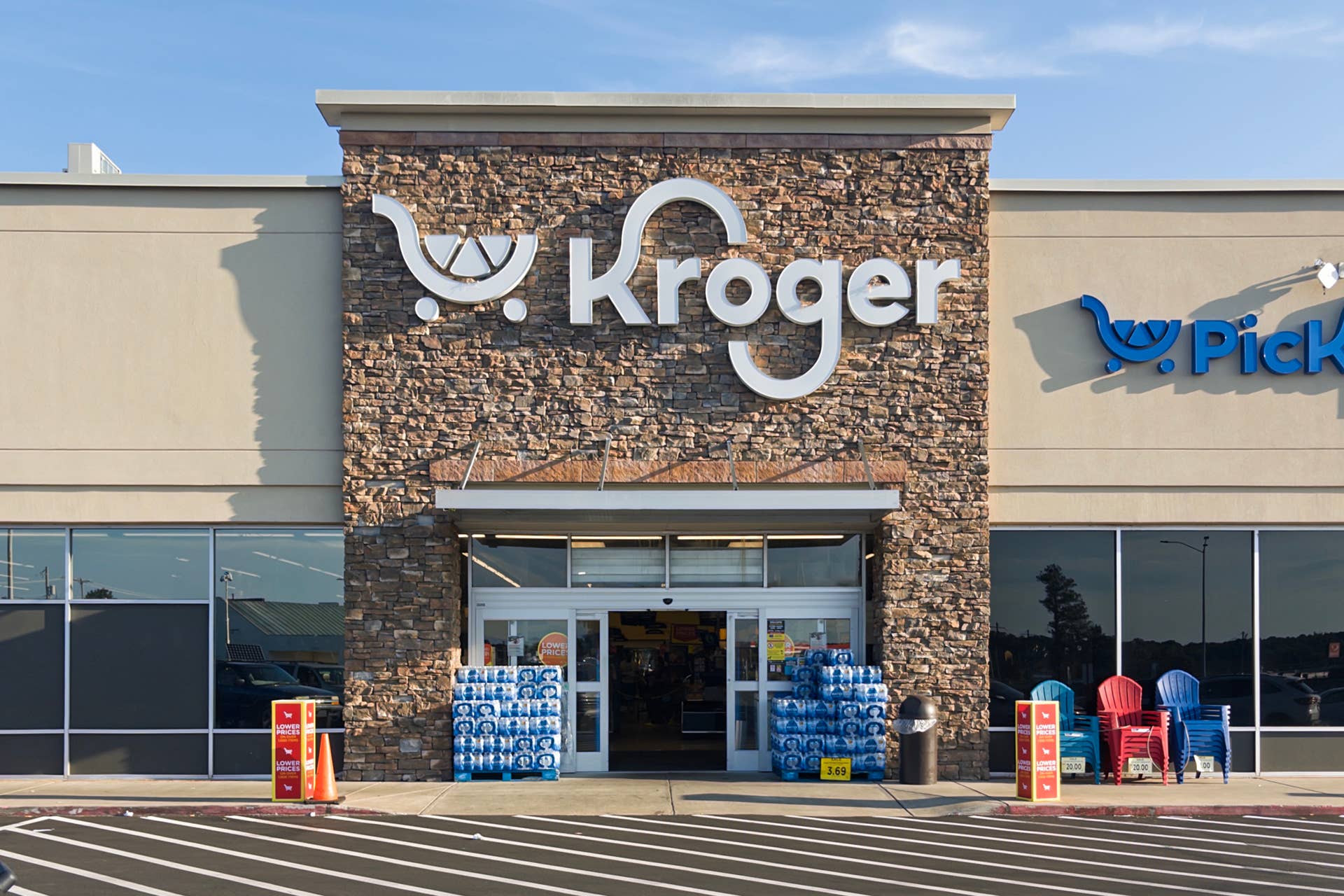
Kroger wants AI to do more of the grocery shopping
Kroger used Groceryshop to outline one of the industry’s more ambitious visions.
The grocery giant calls it “Grocery as a managed service.”
Here’s some of my coverage of changing grocery business:
- Aldi: The discount grocer is rapidly expanding across the U.S. as shoppers continue looking for lower prices.
- Kroger: Kroger has been adding exclusive products and new reasons for customers to visit stores as competition from Walmart, Amazon and discount chains intensifies.
- Grocery prices: Shoppers remain under pressure from elevated food costs, making cheaper meal options increasingly attractive.
Instead of shoppers creating weekly lists and searching for every product themselves, Kroger envisions customers giving AI information about their goals and preferences, allowing AI agents to help plan and complete their shopping.
Kroger’s existing AI Shopping Assistant can help customers plan meals, find recipes, and build carts tailored to their budgets, dietary needs, and preferences.
The company also has an important advantage: years of information about what its loyal customers buy.
Now it wants to connect more of those capabilities.
“The next frontier is Grocery as a managed service,” Kroger said in outlining its Groceryshop strategy.
Kroger Executive Vice President and Chief Digital Officer Yael Cosset said the company has long used data science and AI to forecast demand, connect shoppers with savings, and help them find products.
The idea is that shoppers could eventually tell an AI what they need rather than search for each item themselves.
“The goal is not autonomy everywhere,” said Cosset in a company statement.
“The goal is using the right level of AI based on risk, repeatability, and the need for human judgment. Different cases will sit at different stages, and strong governance remains at the center.”
But Kroger isn’t alone.
Albertsons wants AI to know why you’re shopping
Albertsons Vice President of Data Science and AI Product Harshad Agashe told Groceryshop attendees that personalization needs to go beyond predicting which products customers are likely to buy.
The technology also needs to understand what they’re trying to accomplish.
Someone shopping for their regular weekly groceries has different needs from someone planning a birthday party or trying to feed a family without exceeding a $100 budget.
AI could use that context to build a different basket for each shopper.
Ahold Delhaize, parent company behind names like Stop & Shop, Hannaford, and Albert Heijn, is moving in a similar direction.
Dutch supermarket chain Albert Heijn is expanding its AI capabilities beyond meal inspiration toward personalized meal planning, pre-filled baskets, and automatic coupon activation, according to Coresight’s Groceryshop coverage.
Instacart CEO Chris Rogers also pointed to the complexity of grocery shopping.
Consumers repeatedly make decisions involving price, nutrition, household preferences, and convenience.
Instead of individually searching for everything needed for dinner, a shopper could eventually make a single request and let an AI assistant handle much of the searching.
Coresight identified reducing this “decision fatigue” as one of AI’s biggest opportunities in the grocery industry.
It does sound convenient.
Adding grocery items to the list takes me half a working day, yet I still do not use the list option. But I do trust AI to add my usual purchases to the cart.
But making AI useful enough to take over that job is another challenge entirely.
Grocers have one big problem with AI
An AI assistant can’t reliably build a grocery basket if it doesn’t know what’s actually on the shelf.
Retailers need accurate information about products, prices, inventory, nutrition, and customer preferences.
Schnuck Markets discovered the problem firsthand while developing its AI assistant.
The grocer consolidated information and added product details so the technology could better understand customer questions.
But after launching the assistant, Schnucks discovered it had overlooked something remarkably basic: store operating hours.
DoorDash co-founder Andy Fang raised the same issue at Groceryshop, calling clean product data a “no regrets move” for retailers.
Nearly 95% of DoorDash customers choose an item with a good product description over one without one, according to data Fang cited at the conference.
“AI is only as good as the data that’s being fed to it,” Fang said.
His comments also offered more context on DoorDash’s push to have AI handle more of the ordering process for customers.
And retailers aren’t starting from scratch.
A 2026 Coresight Research survey of U.S. retail professionals found that 83% of respondents had already deployed AI in customer service.
Another 77% had deployed it for fraud and loss prevention, 72% for supply-chain optimization, and 63% for store operations.
The question increasingly isn’t whether retailers will use AI. It’s how much of the shopping they will eventually allow AI to do.
AI could decide what makes it into your grocery cart
Giving AI more control over shopping introduces another complication.
If consumers ask an AI agent what to buy rather than browsing supermarket aisles or scrolling through hundreds of products online, the technology could gain enormous influence over which brands shoppers ever see.
There is already evidence that consumers may be willing to give it that influence.
Research from Accenture presented at Groceryshop found that 56% of loyal shoppers would consider switching brands if an AI agent recommended a better alternative.
An assistant tasked with finding dinner for less than $40, then, isn’t simply saving a shopper time.
It could influence which pasta sauce, chicken, cereal, or private-label product ultimately ends up in the basket.
Coresight said retailers will therefore need to protect their direct relationships with customers as AI agents increasingly serve as the interface for shopping.
The shift could eventually affect another important part of the retail business: physical stores.
For now, however, stores aren’t going anywhere.
Americans spent about $6.087 trillion in stores in 2025, compared with $1.431 trillion online, according to Capital One Shopping research.
And 80.4% of retail sales are expected to occur in brick-and-mortar stores in 2026.
Grocery shopping is even more closely tied to stores, with 69% of consumers primarily buying groceries in person.
I can understand the charm in walking down the aisles, finding new things, and also buying things you don’t even need.
One reason I avoid going to the grocery store is that I almost always exceed my planned budget and end up piling items into the cart that weren’t on my list.
But my delivery preference is far from the way the majority of Americans buy groceries.
This means any threat AI-powered online shopping poses to physical grocery stores is unlikely to happen overnight.
Retailers first have to persuade more consumers to shift a deeply ingrained shopping habit online. Then they have to convince shoppers to trust an algorithm with decisions they have traditionally made themselves.
This could take time.
But Groceryshop offered a glimpse of where grocers want the technology to go.
For retailers, the ultimate goal may be to make grocery shopping so automated that customers don’t have to search for every product, plan every meal, or perhaps even write a grocery list.
Related: DoorDash wants customers to stop using its app to order food