
As the parent of a toddler, Carter’s has been a familiar name in my household for years.
From pajamas and bodysuits to the constant need for the next size up, the 161-year-old children’s apparel brand has long been a reliable stop for parents navigating the early years.
But now Carter’s itself is growing up, or at least trying to.
And for parents who have found some of its assortments repetitive, the changes could be noticeable.
As an avid online shopper, I am looking forward to a quicker and more seamless app experience.
Carter’s has already been experimenting with newer concepts, such as Otter Avenue, its toddler fashion brand, which came out in 2025.
But now the children’s apparel giant is undertaking a broader revival strategy that spans the entire business.
From its logo and advertising to the number of products it sells, the stores it operates, and the way it interacts with parents, everything is up for change.
Carter’s is shrinking parts of its business to rebuild others
Earlier this month, Carter’s unveiled a refreshed brand identity and a new promise to “Let every child’s light shine,” accompanied by its “Watch Them Glow” marketing campaign.
The revamped logo replaces the apostrophe in Carter’s with a shooting star.
The company is also changing its social media presence, product storytelling, and partnerships aimed at families.
More Retail:
- Dollar General CEO raises major red flag about consumers
- 44-year-old mall retailer shut 40 stores, now it’s turning a profit
- DSW has a surprising new plan to get shoppers to spend
Additional changes to Carter’s stores, products, and packaging are expected to roll out in 2027.
But the makeover goes much deeper than a new logo.
Behind the consumer-facing refresh is a broader effort to make Carter’s leaner and return the company to consistent growth.
Carter’s has identified roughly 150 low-margin stores in North America that it plans to close between fiscal 2025 and 2028, primarily as leases expire.
The company closed 35 stores in FY 2025 and expects to close roughly 60 more during FY 2026.
Those 150 stores generated approximately $110 million in net sales during fiscal 2025, according to the company.
Carter’s expects some of those sales to shift to nearby stores and its e-commerce business, while eliminating fixed costs associated with weaker locations.
It has also substantially suspended new U.S. store openings under its existing model.
In addition to store closures, the company is shrinking internally.
Carter’s disclosed plans to eliminate approximately 300 office-based positions in 2025, as part of a restructuring expected to generate about $35 million in annual savings beginning in 2026.
But the strategy is not simply about cutting costs.
Carter’s is also selling fewer products.
The company has been reducing its product choices by roughly 20% to 30% and shortened its product-development calendar by about three months.
This is intended to reduce overdevelopment and allow the retailer to react more quickly to changing trends.
During its second-quarter earnings call, management said Carter’s maintained its overall share of the children’s apparel market during the first half of 2026, with gains in baby and kids offset by a decline in toddler.
These changes can help Carter’s gain more advantage by remaining on top of new trends.
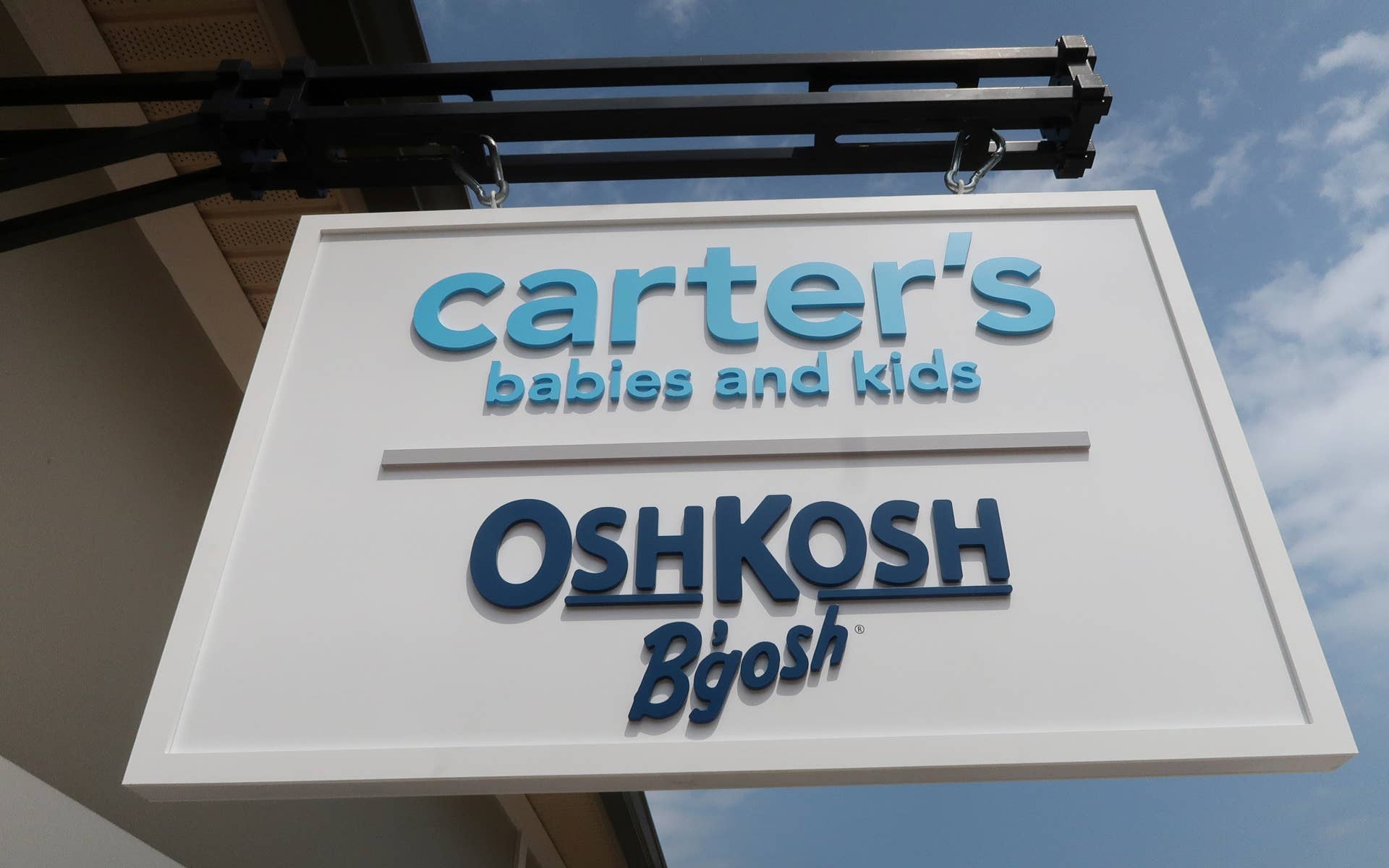
Carter’s turnaround is showing signs of progress
There are early indications that the changes are gaining traction with shoppers.
Carter’s U.S. retail comparable sales rose 10.5% during the first quarter of fiscal 2026, marking the company’s fourth consecutive quarter of positive comparable sales growth.
That momentum continued during the second quarter:
- Net sales rose 5% to approximately $615 million
- Adjusted operating profit jumped 54%.
- U.S. retail comparable sales increased another 5%, marking a fifth consecutive quarter
The company is also attracting more young shoppers.
CEO Sharon Price John said Carter’s added Gen Z consumers at a mid-teens rate during the second quarter.
Management said Gen Z families were increasingly visiting its website and app and gravitating toward higher-priced products.
The company has also added new digital features, including enhanced outfit-building tools, AI-optimized product reviews, passwordless login, and an updated AI customer-service chat that now handles roughly one-third of customer contacts.
Carter’s is testing new products and experiences
The new strategy is increasingly visible in what Carter’s is putting in front of customers.
One of its fastest-growing newer brands is Little Planet, which focuses on natural and sustainable fabrics.
Little Planet surpassed $100 million in sales and continues to grow across both Carter’s retail and wholesale channels.
Management also reported growth in Little Planet during the second quarter.
Carter’s is also experimenting with limited-edition collaborations intended to draw younger parents to the brand.
During the second quarter, it partnered with sportswear brand Umbro around the World Cup, including jersey-personalization events in several markets.
Management said the products attracted disproportionately high engagement from Gen Z and multicultural consumers, and buyers of the collection purchased higher-priced items and more units per transaction.
Then there is sleepwear, a longtime Carter’s strength that the company is trying to expand beyond pajamas.
Earlier this month, Carter’s launched its Not-So-Scary Monsters collection, a line of sleepwear and playwear for babies through older children starting at $7.
The collection is designed to turn the familiar childhood ritual of checking for monsters into an interactive bedtime experience.
Carter’s also brought in pediatric sleep specialist Dr. Funke Afolabi-Brown to provide guidance to families.
The launch followed Carter’s research finding that nearly 70% of parents of children ages 2 to 6 described bedtime as at least somewhat stressful.
The initiative aligns with what management earlier said of its plans to lean more heavily into sleepwear in the second half of the year.
Carter’s wants a bigger relationship with parents
The bigger shift may be in what Carter’s wants the brand to represent.
Price John told analysts that the company wants to become more consumer-centric and data-driven, looking beyond the child to multiple customers.
This includes caregivers and gift-givers, as well as products, shopping experiences, and marketing to build longer-term relationships with families.
Carter’s is now putting that philosophy into practice.
On Sept. 24, the company announced a partnership with parenting expert Dr. Becky Kennedy and her Good Inside platform to launch the Childhood Confidence Project.
The initiative gives parents access to educational materials, videos, and workshops designed to build confidence in children, including temporary free access to some Good Inside content normally behind a paywall.
Additionally, the retailer launched “Dadfirmation Station” Hotline for children to share words of encouragement for their father figures.
The company is also expanding partnerships with groups such as Outward Bound and Boys & Girls Clubs of America, and has created a “Light Makers” creator program focused on parenting and childhood experiences.
Carter’s occupies what management describes as a unique position between caregivers and children.
It beginns with families when babies are born and sometimes continuing through grandparents who later become gift-givers.
For a retailer that has spent generations selling the basics of childhood, the strategy suggests Carter’s willingness to sell something broader: not just clothes, but a longer relationship with parents.
There are still reasons for caution.
Management narrowed its full-year sales growth outlook to 2%-3%, citing softer wholesale demand and signs that shoppers remain sensitive to higher prices.
Related: Popular restaurant chain closes nearly all locations in 2026