
Every budget has a breaking point, and it’s usually smaller than you think. A dollar here and a dollar there rarely feels like a decision until the total at the register says otherwise.
Cheap makeup has long lived in that space. Shoppers who would never pay $40 for a prestige foundation will happily drop a $6 lipstick into a Target basket, and brands have built empires on that impulse.
E.l.f. Beauty (ELF) is one of the biggest winners of that strategy. The Oakland, California, company just logged its 30th straight quarter of net sales growth, according to its fiscal first-quarter earnings release.
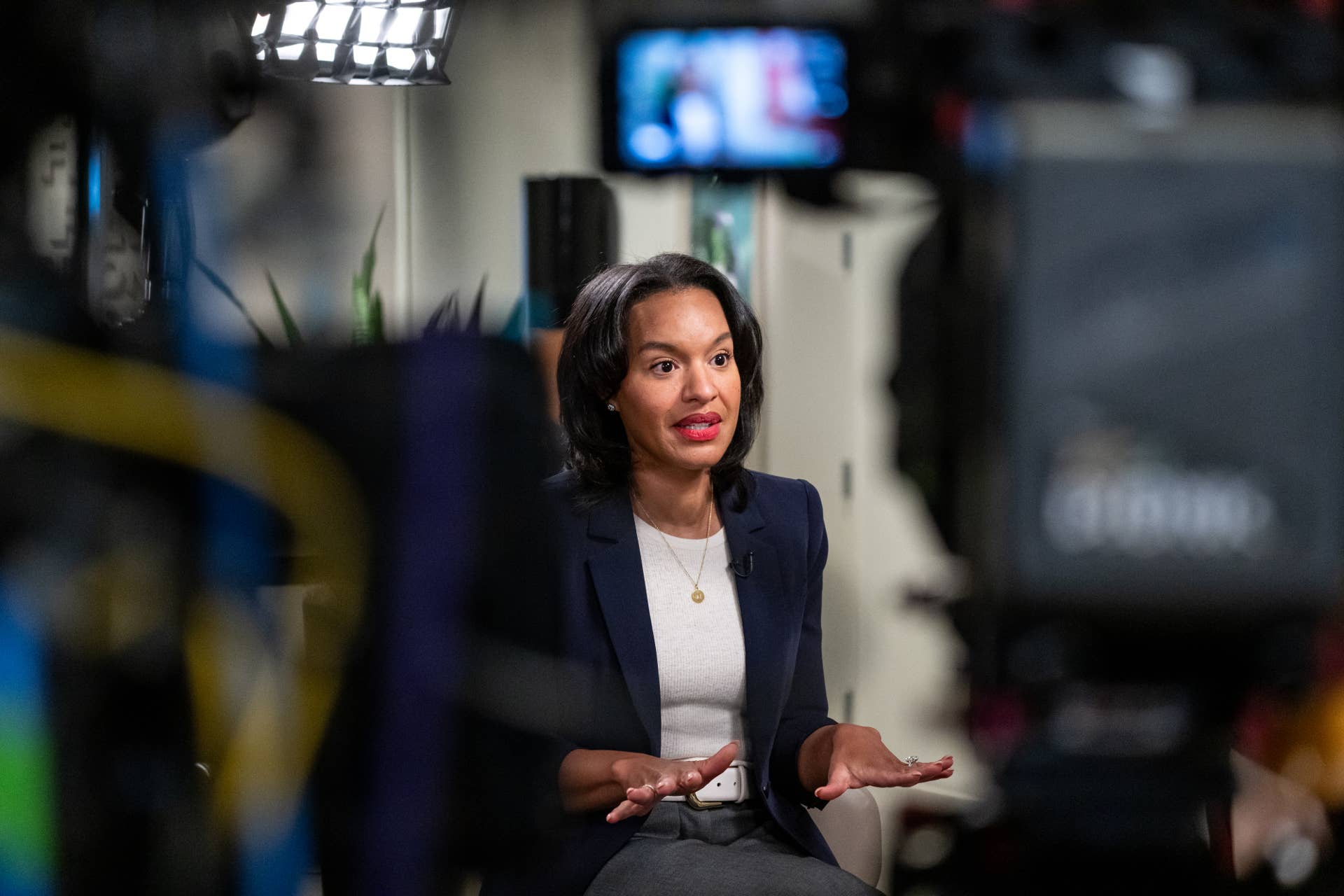
Even e.l.f. found the limit, though. The company’s roughly $1 price increase, taken in August 2025 to offset tariffs and inflation, ultimately caused sales to decrease, CFO Mandy Fields said in an interview with CNBC published Friday, Oct. 16.
Then e.l.f. did something rare for a consumer brand. Once tariff refunds came in, the company walked back many of those increases, CNBC reported.
How the $1 price hike played out
The increase took effect Aug. 1, 2025, as a $1 global move meant to offset higher tariff costs, management said on the company’s fiscal second-quarter 2026 earnings call, according to a Motley Fool transcript. E.l.f. explained the increase to its community on social media, Fields said on a CFO Leadership podcast.
More Retail and Consumer:
- Hailey Bieber’s Rhode could unlock $200 million for e.l.f. Beauty
- How Walmart, Home Depot, Lowe’s tariff refunds affect shoppers
- Ulta Beauty’s move to win back shoppers takes a new turn
CEO Tarang Amin said at the time that consumers appreciated the openness. Fields now says the higher prices still dented sales, CNBC reported.
The relief came from refunds of tariffs collected under the International Emergency Economic Powers Act (IEEPA). Those refunds added about 1,050 basis points to e.l.f.’s gross margin in the quarter ended June 30, lifting it to 83%, according to the company’s earnings release.
Lower prices are already moving e.l.f. products
Fields previewed this lesson months ago. E.l.f. tested a cut on its Halo Glow skin tint from $18 to $14 and saw a lift of almost 40% on that item, she told Yahoo Finance in May.
In my analysis, that test shows why the rollback makes sense. A 22% price cut paired with a 40% lift means the item could bring in roughly 9% more revenue at the lower price, assuming the lift was measured in units.
Related: Dollar General rolls out limited deals for value-driven shoppers
CNBC reported that e.l.f. is keeping certain items at their lower price points. For you, that means some of your regular e.l.f. purchases may now cost less than they did a year ago.
Fields also said about 75% of the company’s portfolio sits at $10 or less, in the same Yahoo Finance interview. Even shoppers who are being careful with every dollar are still buying the brand, she told CNBC.
Most of the tariff refund is going to marketing
Most of the refund is going into marketing, Fields told CNBC. That fits the company’s playbook.
“We spend 23% to 25% of our net sales behind marketing and digital,” Fields said in the CNBC interview. She added that most of that spending goes to mid- and smaller-tier creators rather than the biggest influencers.
The company plans to reinvest its full $50 million tariff refund across the rest of the fiscal year, leaving no net boost to adjusted EBITDA, according to a TipRanks summary of the fiscal first-quarter call.
Analysts lift their targets on ELF shares
Here’s where the numbers stand, according to the company’s earnings release and analyst notes:
- Net sales rose 36% to $479.4 million in the quarter ended June 30, and adjusted earnings were $1.75 a share, the company reported.
- E.l.f. raised its fiscal 2027 outlook to 18% to 20% net sales growth, or $1.938 billion to $1.968 billion, up from 12% to 14% previously.
- Citi raised its price target to $130 from $118 and kept a Buy rating on Oct. 14, AD HOC NEWS reported, citing Markets Insider.
- Morgan Stanley kept an Equal-weight rating and raised its target to $103 from $90 on Oct. 15, according to Yahoo Finance data.
Investors should keep one caveat in view. Excluding the one-time refund, e.l.f. expects full-year gross margin to be roughly flat, according to the TipRanks call summary.
Debt is the other number to watch. Total debt stood at $834.2 million on June 30, up from $256.7 million a year earlier after the rhode acquisition, the company reported.
The next read on whether lower prices are paying off should come with the fiscal second-quarter report. TipRanks estimates that report for Nov. 4 based on past schedules, though e.l.f. has not confirmed a date.
Your beauty budget may get a small break
You don’t need to follow the stock to benefit from this story, and I think shoppers are the clearest winners here. Check the prices on the e.l.f. items you buy most often, because some of last year’s increases have been rolled back.
The bigger lesson applies to every brand in your cart. Companies are learning that shoppers notice a single dollar, and some are now competing to give it back.
A $1 price change sounds small. E.l.f.’s CFO just admitted it was big enough to change how its shoppers behaved, and that puts more power in your hands than you might think.
Related: E.l.f. Beauty CEO defends harsh new reality customers will face