
Artificial Intelligence is everywhere, from retail and commercial operations to ride-hailing services and, obviously, technology companies.
Even help centers are using AI to deliver customer services, so why not use it to automate some everyday tasks?
In its latest round of AI upgrades, DoorDash is launching yet another feature to make ordering easier.
Customers may soon be able to order dinner without opening the company’s app or even searching for a restaurant.
Also read: Walmart, Trader Joe’s recall frozen fruit after outbreak declared over
DoorDash’s new AI service wants you to text orders
The delivery giant is introducing an AI-powered service that lets customers text DoorDash what they want. The technology would then search for restaurants and menus, assemble an order, and handle checkout.
It does sound like a dream.
Customers can also make requests as specific as a particular dish or as broad as asking for a local recommendation based on their mood.
Here’s some of my coverage of changing grocery business:
- Kroger: Kroger has been adding exclusive products and new reasons for customers to visit stores as competition from Walmart, Amazon, and discount chains intensifies.
- Grocery prices: Shoppers remain under pressure from elevated food costs, making cheaper meal options increasingly attractive.
The service can also remember previous orders and preferences, meaning a customer could simply ask for their “usual.”
DoorDash launched the service in beta in the U.S., with customers able to join a waitlist. The move pushes DoorDash further into a rapidly emerging form of shopping in which consumers tell an AI assistant what they need instead of searching through hundreds or thousands of individual products.
And grocery executives are betting that this could significantly change how Americans fill their carts.
At Groceryshop 2026 in Las Vegas, retailers and delivery companies repeatedly described a future in which AI doesn’t merely recommend an item, but also completes much of the shopping trip.
“The shopper is not asking for AI; they are asking for less work,” Coresight Research CEO Deborah Weinswig said, according to the firm’s conference report.
Kroger discussed customers using AI to create baskets from recipes, photos, and personalized information, while Albertsons described a scenario in which a shopper could give an assistant a weekly budget, request their regular groceries, and tell them they were hosting guests.
The AI agent could then assemble the basket.
This is not unlike the “create your list” feature that grocery apps like Walmart and Amazon offer for repeatable orders, but would be slightly more convenient for occasional shopping that requires particular items.
DoorDash wants AI to know what customers buy
DoorDash’s new text service takes that idea one step further.
The company says its assistant can remember whether a customer skips cilantro, adds extra sauce, or routinely orders a particular coffee. With permission, it could eventually proactively text a customer to ask whether they want their regular order.
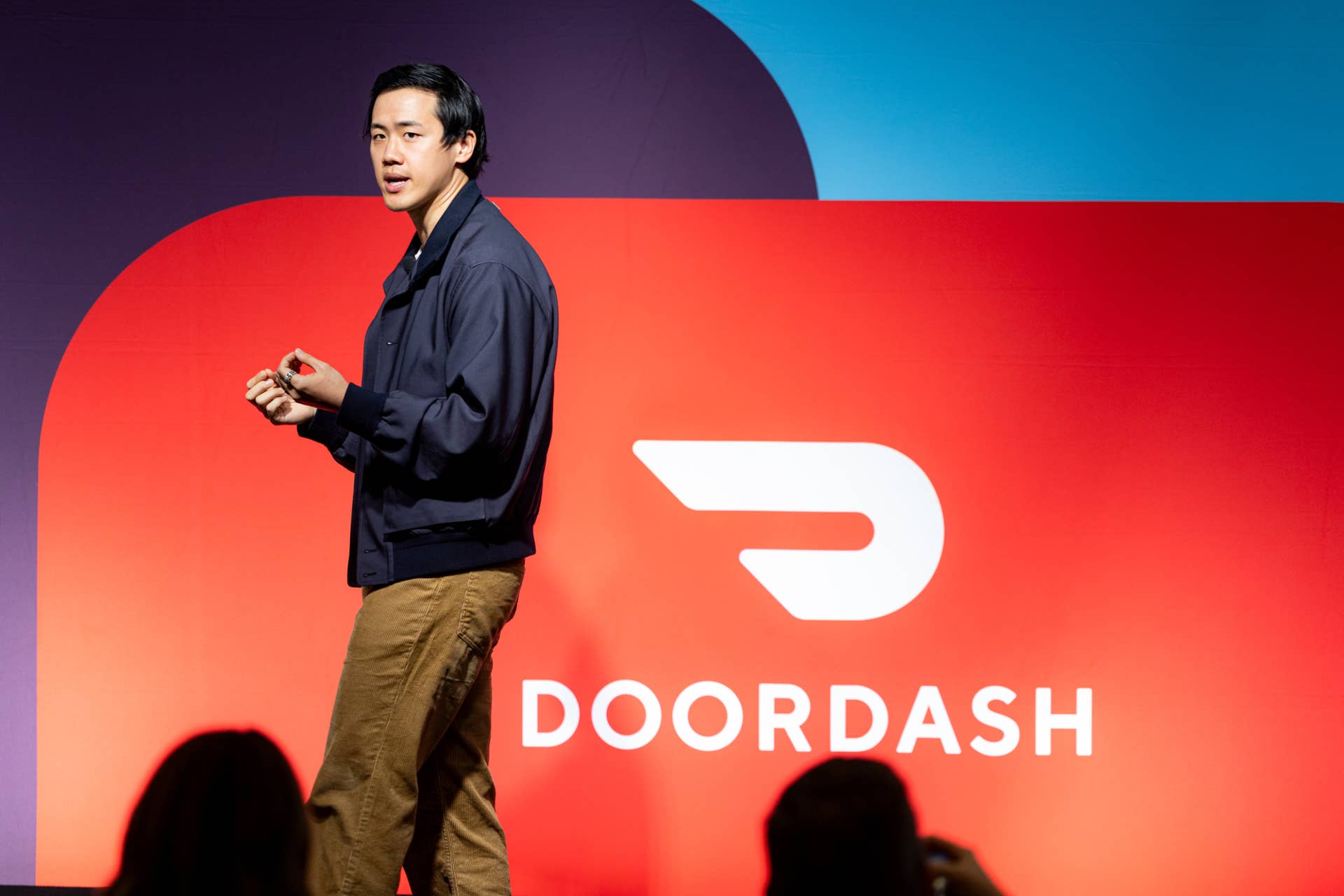
“Managing tasks like ordering lunch or groceries shouldn’t feel like work,” DoorDash co-founder Andy Fang said.
The company is also adding AI tools specifically for grocery shoppers.
More than 30% of grocery orders made through Ask DoorDash are routine restocks, according to DoorDash.
One new feature can automatically create a cart based on a shopper’s usual products.
Another feature searches the selected grocer’s inventory for cheaper alternatives and shows customers the potential savings before checkout. Customers decide whether to accept the substitutions.
Early results explain why retailers are so interested: DoorDash says grocery baskets built using Ask DoorDash are completed five times faster.
Those orders also have nearly 50% higher basket values and contain about 60% more unique products than traditional orders made by the same customers. The figures are based on DoorDash marketplace data and orders from 2026.
I have often used Walmart’s “Your usuals, kick start your basket” option to save time on the weekly repeat orders.
AI shopping still has a major problem
But handing more of a shopping trip to AI also makes the quality of the information behind the assistant increasingly important.
That concern surfaced repeatedly at Groceryshop.
Grocery executives warned that incomplete or fragmented product data can produce poor AI recommendations.
Schnuck Markets, for example, had to consolidate data, add product information, and translate internal terminology into language shoppers would understand before launching its AI assistant.
The retailer even discovered after launch that it had failed to provide the assistant with something considerably more basic: store operating hours.
Fang, DoorDash co-founder, made a similar point at Groceryshop, saying clean product data is a “no regrets move” for retailers.
Nearly 95% of DoorDash customers choose an item with a good product description over one without, according to the conference recap.
The tension is becoming central to the industry’s AI push. Retailers want assistants who can make shopping faster and increasingly act on a customer’s behalf. But the more decisions those assistants make, the more consumers have to trust the information and recommendations behind them.
For DoorDash, the goal is ultimately to make ordering happen before customers even think about opening an app.
“We’re excited to see how people let us handle more of their daily needs,” Fang said, “like putting your usual protein bowl or morning latte on autopilot.”
Related: ‘Shark Tank’ beverage brand files Chapter 11 bankruptcy