
After its former owner collapsed under unsustainable debt and the brand lost its physical retail presence, a once-popular fashion brand is making an unexpected return to stores.
The brand disappeared from the high street in 2019 after its then-owner entered administration, resulting in the closure of dozens of standalone stores and more than 100 department-store concessions.
The brand making its return is Karen Millen.
Founded in 1981, Karen Millen is a British womenswear brand known for its tailored clothing, coats, and occasionwear.
Karen Millen comes back to physical stores
Karen Millen is returning to physical stores seven years after shifting to an online-only retail model.
The physical relaunch began rolling out on August 14 through a partnership with The Foschini Group (TFG), with Karen Millen concessions opening across the UK at retailers including Hobbs, Phase Eight, and Whistles. The rollout is also expanding to Liverpool One and Aberdeen Union Square in Scotland.
The initial release will feature Karen Millen’s occasionwear and bestselling pieces, including items from its Forever Collection. The collection includes dresses, shirts, blazers, and coats, with prices ranging from £49 to £429 ($67 to $586).
“Karen Millen is a brand with real heritage, recognition and a loyal customer base, so bringing it back to the high street is a significant moment,” Debenhams Group CEO Dan Finley told Drapers.
“Our customers want great fashion, but they also want to experience brands in different ways, and physical retail gives us another opportunity to do that.”
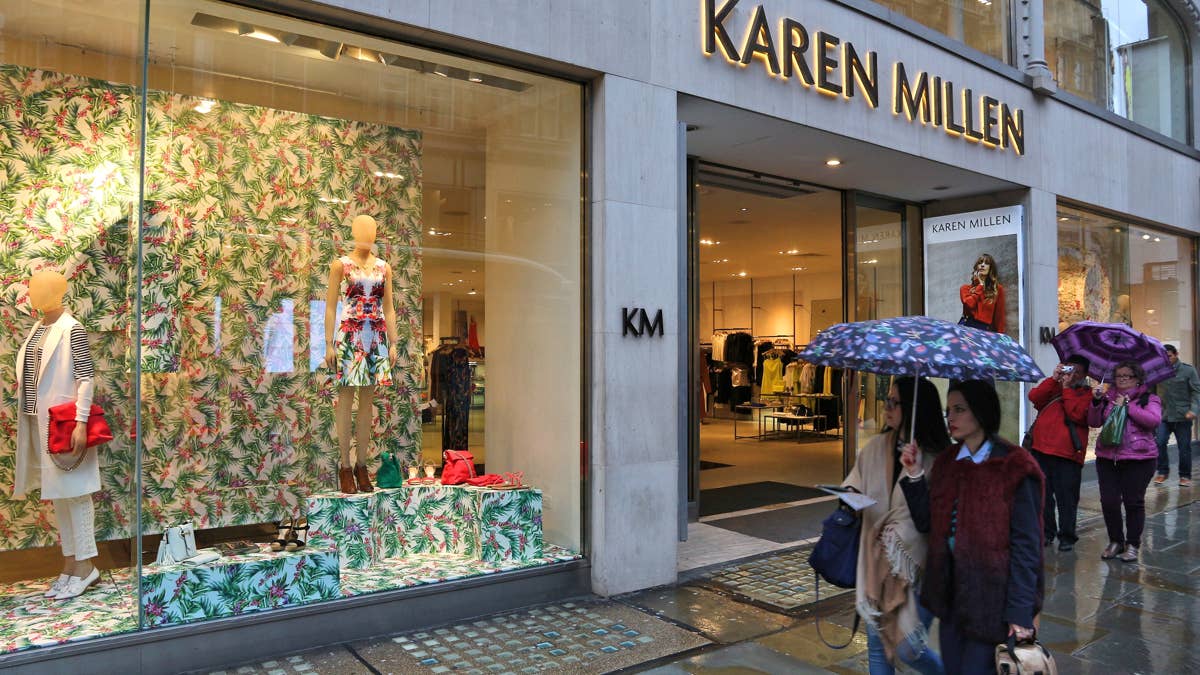
Why Karen Millen closed its physical stores
Karen Millen’s retreat from physical retail came during a broader financial crisis for its then-owner, Mosaic Fashions.
Mosaic Fashions entered administration in August 2019 after struggling with unsustainable debt and high operating costs. The company also faced challenges affecting the wider UK retail sector, including declining foot traffic and sluggish consumer spending, while efforts to secure a buyer for the business were unsuccessful.
In the UK, administration is an insolvency process that can provide financially distressed companies with protection from creditors while licensed insolvency practitioners work to restructure the business or find a buyer. It serves a broadly comparable purpose to Chapter 11 bankruptcy protection in the U.S., although the two processes operate under different legal frameworks.
The collapse resulted in the closure of 32 standalone Karen Millen stores in the UK, along with 117 department-store concessions. The brand subsequently operated entirely online.
A few months later, Karen Millen was acquired out of administration by Boohoo Group in an £18 million ($24.55 million) deal after Mosaic Fashions failed to find a buyer for the entire business.
Boohoo Group later changed its name to Debenhams Group in 2021.
The return to physical stores marks a significant change from the online-only strategy that followed the 2019 administration. Rather than rebuilding the standalone store network it once operated, Karen Millen is using concessions within established retail locations, allowing the brand to regain a physical presence without returning to the same store-heavy model that preceded its 2019 collapse.
Other retailers have also pulled back from physical stores
Karen Millen’s return comes as other UK fashion and department-store brands continue to face financial pressure, with some entering administration, closing physical locations, or shutting down their operations entirely.
Here’s some of my previous coverage with recent examples:
- Quiz: Entered administration in February 2026 and closed all its remaining standalone stores in June.
- LK Bennett: Entered administration in January 2026, closed all stores and concessions, and ceased e-commerce operations in April.
- Harvey Nichols: Was acquired by Frasers Group in August 2026 through a pre-pack administration as the luxury department store faced mounting financial challenges.
Related: Discount grocery chain closes 12 stores after expanding too fast