
A major international clothing retailer is continuing to shrink its U.S. footprint after years of store closures and financial challenges.
The latest shutdown affects a long-running location in one of the country’s most prominent retail markets, further reducing the brand’s presence in the U.S. The closure comes as the retailer works to reshape its business around a smaller, more streamlined operation.
With only a handful of stores remaining nationwide, the company’s U.S. footprint is now a fraction of what it once was.
Founded in 2003, Superdry & Co. is a U.K.-based international clothing brand with stores across Europe, the U.S., Asia, the Middle East, and the U.K.
Superdry closes another U.S. store after mass shutdowns
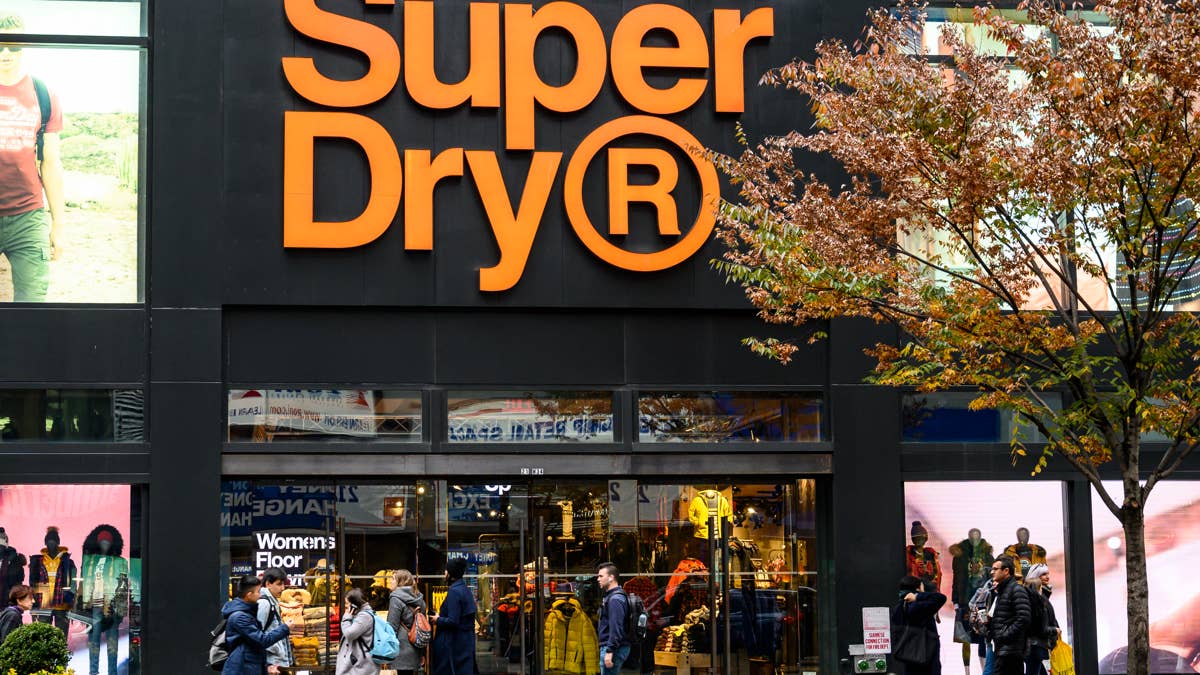
Superdry has closed its second New York store at 21-25 W. 34th St. in Manhattan after about a decade at the location, further reducing its physical presence in New York and across the U.S.
The retailer’s closest remaining store is at 729 7th Ave. in Manhattan.
Superdry has been closing locations in the U.S. and other markets for several years as it works to reduce costs and restructure its business. The company now has only four stores remaining in the U.S., located in California, Florida, Illinois, and New York, according to its store locator.
The latest closure underscores the scale of the retailer’s U.S. retrenchment as it continues to operate with a smaller physical footprint.
Why Superdry has closed nearly all U.S. stores
Superdry began a major restructuring program in 2024 after financial difficulties pressured the business. The company pursued the plan after deciding against a takeover offer, with the restructuring designed to help avoid insolvency and stabilize its finances.
The plan included worldwide store closures, an equity raise, and the delisting of Superdry’s shares from the London Stock Exchange. The company said the measures were intended to accelerate its turnaround and put the business on a more sustainable footing.
As part of the restructuring, Superdry planned to operate a more asset-light and simplified wholesale business while reducing its cost base. The company also reviewed its international store portfolio to determine which locations should be shuttered or potentially sold to franchisees or other third parties.
At the time, Superdry said approximately 25 to 30 stores in Europe had already been identified for closure, while additional locations were subject to review. The restructuring also resulted in a reduction in the company’s workforce.
Superdry had also been reshaping its international business before the restructuring. In 2023, it sold its Asia-Pacific and South Asia intellectual property assets for nearly $100 million.
The company also moved to a third-party e-commerce platform to replace its proprietary system, saying the change would support a more efficient digital strategy in the U.K. and internationally.
In its financial earnings report, Superdry described its turnaround program as focused on improving efficiency, simplifying the business, and establishing a new operating model designed to position the company for long-term success.
Superdry’s financial struggles
Superdry’s financial difficulties preceded the latest wave of store closures.
The company last reported its financial results in January 2024, when it published results for the first half of its fiscal 2024 period. The retailer had also delayed its annual report and requested a temporary suspension of trading in its shares in September 2023.
According to its first-half fiscal 2024 earnings results, Superdry reported significant declines across several parts of its business:
- Group revenue: Declined 23.5% year over year
- Retail sales: Fell 13.1%
- Wholesale: Down 41.1%
- E-commerce sales: Decreased 19.1%
- Store sales: Fell 9.9%
- Adjusted loss before tax: Increased 86%
- Adjusted operating loss: Rose 45.5%
Superdry attributed the weaker performance to a challenging consumer retail environment, unseasonal weather, and continued underperformance in its wholesale business.
The company said it expected to generate more than £40 million ($46 million) in savings during the financial year by rightsizing its operating cost base.
Superdry ended the period with 216 company-owned stores worldwide, highlighting the much larger physical footprint it maintained before the subsequent rounds of closures.
Superdry’s new strategy
After several difficult years, Superdry has been working to reposition the business around a smaller and more streamlined operating model.
The company rebranded as Superdry & Co. in 2025 and has reported a return to profitability as it continued its turnaround efforts.
The retailer has also begun reopening or relaunching select stores in the U.K. and Europe. One of its most notable moves was the relaunch of its flagship location on London’s Oxford Street under the Superdry & Co. concept.
Those moves suggest that Superdry’s strategy is not simply to eliminate its physical stores. Instead, the company is attempting to reduce its overall footprint while concentrating resources on markets and locations it considers more viable.
The U.S. brick-and-mortar presence, meanwhile, has continued to contract. With just four stores remaining in the country after the latest New York closure, Superdry’s American retail presence is now substantially smaller than it was during the company’s earlier expansion.
For now, the retailer’s strategy centers on a leaner operation, fewer physical locations, and a greater emphasis on markets and channels that can support its turnaround.
Retailers that have closed stores nationwide
Superdry is not alone in reassessing its physical footprint. Several major retailers have closed stores or announced additional shutdowns as they adjust to changing consumer demand and shifting market conditions.
Here’s some of my previous coverage of retail store closures:
- Signet Jewelers: Plans to shutter approximately 100 stores in fiscal 2027 and has integrated two brands into its larger, more established banners.
- The Foschini Group: Plans to close 180 additional stores over the next three financial years
- Saks Global: Plans to close an additional nine stores following the shutdown of hundreds of locations and its Chapter 11 bankruptcy filing.
- Kering: Closed 133 locations across its brands in 2025, with an additional 100 store shutdowns scheduled worldwide in 2026.
Related: Nearly 200-year-old retailer exits an entire market