
For many Americans, the financial squeeze shows up in places as simple as a stop at the gas station and a snack.
One Las Vegas-area shopper recently posted on Reddit that 7-Eleven’s app knocked the price of gasoline from $4.19 to $3.73 a gallon, saying they were simply trying to help others save because fuel prices were getting stressful.
Another shopper described walking away from a convenience-store purchase after seeing a small bag of gummy candy priced above $4 and buying elsewhere instead.
Those might seem like tiny decisions, but multiplied across millions of customers, they become a business trend.
That is exactly the challenge facing 7-Eleven. North America CEO Mauricio Leyva says Americans’ disposable income is being squeezed enough that the company is rethinking everything from value products to how it sources and distributes goods.
Interestingly, 7-Eleven remains highly profitable, yet winning customers walking through the door appears increasingly difficult. The big question is whether caution is temporary or whether it forces a deeper reset in how 7-Eleven competes for everyday spending.
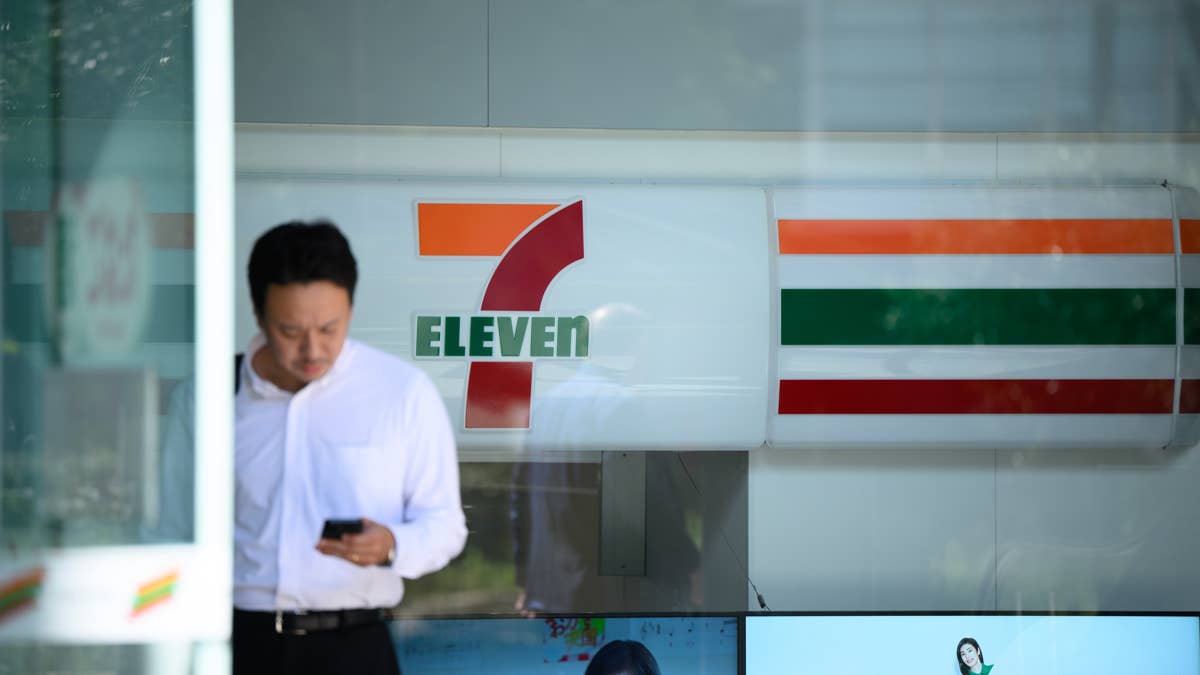
7-Eleven sees shoppers getting more cautious even as profits rise
7-Eleven’s newest CEO just sounded off in an unusually direct way about the customer.
“Sentiment right now is that disposable income is being hit across the board,” Mauricio Leyva, who took over 7-Eleven Inc.’s North American business in August, told Reuters on October 9.
Persistent inflation and fuel costs continue to squeeze consumers while also raising costs throughout 7-Eleven’s supply chain.
More Retail:
- Target tackles a frustrating problem for shoppers
- America’s biggest RV seller closing more stores
- Costco helps members solve a key problem, but at a cost
The company’s latest quarterly figures show why that warning deserves attention.
For the six months ended August 31, 7-Eleven Inc. generated $28.8 billion in revenue, up 9.8%, while operating income surged 45.8% to $1.32 billion as reported by Investing.
Yet U.S. same-store merchandise sales increased just 0.6% across the first half. More tellingly, growth slowed from 1.4% in Q1 to a 0.1% decline in Q2, underscoring the striking disconnect.
Profitability is improving much faster than customers’ spending on merchandise in comparable stores.
Fuel explains a big part of the profit jump.
7-Eleven parent Seven & i Holdings said favorable fuel-market conditions and stronger vertical integration added $414 million to operating-income growth during the first half, as reported by Reuters.
Profitability inside the stores improved as well. Merchandise gross margin rose 0.3 percentage points to 33.5%, meaning 7-Eleven kept about 33.5 cents of every dollar of merchandise sales after deducting the direct cost of the products sold, before other operating expenses.
That said, I feel that makes the headline numbers somewhat deceptive if viewed in isolation. 7-Eleven is not in financial distress. In fact, profits are booming. But the core shopper appears increasingly difficult to persuade to spend more once they walk through the door.
Leyva’s response is already taking shape through better-value products and potential changes to sourcing and distribution.
The deeper question is why everyday convenience spending is becoming harder to win, and whether that behavior extends well beyond 7-Eleven.
Inflation is changing what Americans buy inside convenience stores
7-Eleven’s customer challenge is unfolding against a much broader squeeze on everyday spending.
The latest national inflation data shows the Consumer Price Index running 3.4% higher year over year in August, but the categories most relevant to convenience-store customers were considerably hotter.
Energy prices were up 16.3%, gasoline surged 27.4%, food-away-from-home prices rose 3.4%, and nonalcoholic beverages increased 3.7%. Gasoline alone accounted for more than one-third of August’s monthly CPI increase.
A 7-Eleven customer often buys fuel before deciding whether to add a sandwich, coffee, or snack. When the first purchase becomes dramatically more expensive, the discretionary part of the trip becomes easier to trim.
The industry was already seeing signs of that behavior.
The latest full-year NACS data show U.S. convenience-store in-store sales reached a record $341.2 billion in 2025, even as transaction counts declined roughly 1.6%. In other words, higher dollar sales did not necessarily mean more customer visits.
7-Eleven is not alone in seeing the pressure. Circle K parent Alimentation Couche-Tard CEO Alex Miller recently said consumers continue to face “pressure from inflation and tighter household budgets,” adding that shopping trips have consolidated and expectations around value have risen as reported by BNN Bloomberg.
Interestingly, Couche-Tard still posted its fifth consecutive quarter of positive U.S. same-store merchandise growth in its latest quarter, showing that value-conscious consumers haven’t exactly stopped spending altogether.
Consumers are not necessarily abandoning convenience stores; they are becoming harder to persuade.
That helps explain why 7-Eleven is expanding private label and fresh food while considering bringing more sourcing and distribution in-house. The challenge is increasingly about delivering enough value to keep the fuel customer spending once they step inside.
7-Eleven’s turnaround now has to prove itself before an IPO
7-Eleven’s North American turnaround now faces an additional test, which is if the business can demonstrate enough underlying momentum to make its delayed IPO attractive to Wall Street.
Parent company Seven & i Holdings had initially targeted a North American listing in the second half of 2026, but pushed the plan to the fiscal year beginning April 2027 or later as market conditions and consumer uncertainty got worse as reported by Reuters.
That leaves two different challenges.
North America CEO Mauricio Leyva has to improve the operating business by strengthening merchandise sales, value and store economics. Seven & i CEO Steve Dacus, meanwhile, has to decide when capital markets are willing to reward that progress.
Dacus recently described the IPO environment as “all AI all the time,” underscoring how difficult it has become for consumer companies to compete for investor attention as reported by Investing.
There are encouraging signs. 7NOW sales rose 15.6% to $550 million in the first half, while fresh-food trends have begun improving as reported by Investing.
For me, those are the numbers to watch alongside same-store merchandise sales, margins and whether supply-chain changes lower costs. If better value brings customers back inside the store, 7-Eleven could approach its eventual IPO with a much stronger story than simply higher fuel-driven profits.
Related: Costco is winning at weight loss, but members are paying for it