
For 101 years, families have relied on their local grocery store for weekly food shopping, but in dozens of towns, those familiar doors are quietly closing for good.
When a century-old supermarket chain is abandoning some states entirely and closing a number of stores, it’s usually a sign of struggle.
Traditional regional grocery chains have steadily lost market share to mega-retailers, discount chains, and specialty stores.
While traditional food sales at grocery stores increased 15.7% to $617 billion between 1997 and 2025, sales at warehouse clubs and supercenters quadrupled to $289 billion, a 317.1% increase, according to the USDA Economic Research Service Retail Trends Report.
But not all communities across the country have quick access to Walmart, Trader Joe’s, Kroger, Albertsons, or Aldi. Families in smaller communities feel the loss most when a full-service grocer closes and nothing comparable replaces it.
At the same time, to survive economic pressures such as high labor and lease expenses, changing consumer behavior, and fierce competition, legacy grocers must adjust their strategy.
Sometimes, that evolution includes a difficult decision to close certain locations.
Winn-Dixie quietly shutters 27 locations across the South
Founded in 1925 in Miami, when William Davis bought Rockmoor Grocery (later Table Supply Stores), Winn-Dixie has served generations of Southern families for more than a century.
Over the last two years, the company has gone through several major changes, from an acquisition to a name change to a shift in strategy.
In October 2025, the company announced it would exit Alabama to focus on Florida and southern Georgia, selling most stores and closing those without buyers.
In the same announcement, the company said it would rebrand as The Winn-Dixie Company in early 2026 and sell or close 32 Winn-Dixie and eight Harveys stores in Alabama, Georgia, Louisiana, and Mississippi.
Aldi is also converting about 220 former Winn-Dixie and Harveys stores to its own format, a process expected to finish in 2027.
According to Inc.‘s tally, 27 Winn-Dixie stores in Florida, Alabama, Louisiana, and Georgia have closed or are closing this year.
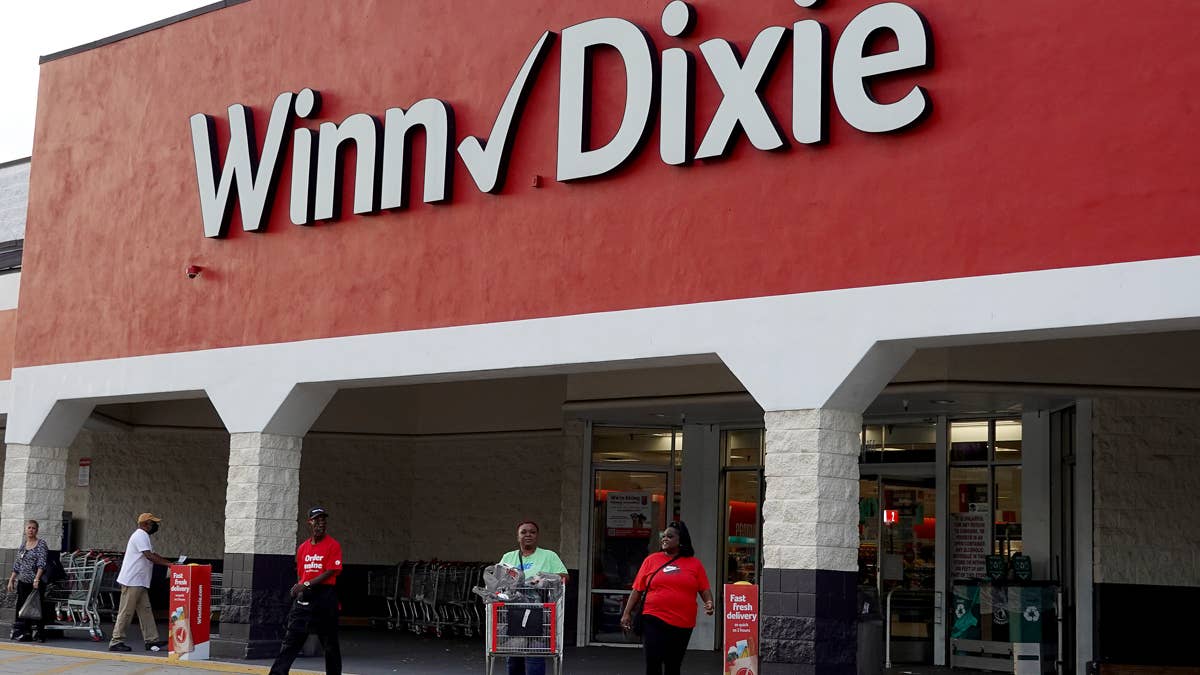
Winn-Dixie stores closed or closing in 2026
- Florida
- 8837 N. 56th Street, Temple Terrace, FL 33617
- 6770 Bird Road, Miami, FL 33155
- 5410 Murrell Road Suite 135, Rockledge, FL 32955
- 7131 N. U.S. Highway 441, Ocala, FL 34475
- 49 S. Arlington Road, Jacksonville, FL 32216
- 201 W. 48th Street, Jacksonville, FL 32208
- 8924 N. Military Trail, Palm Beach Gardens, FL 33410
- 100 Canaveral Plaza Boulevard, Cocoa Beach, FL 32931
- 28047 U.S.-27, Dundee, FL 33838
- 6600 N. Socrum Loop Road, Lakeland, FL 33809
- 1550 S. Highway 29, Cantonment, FL 32533
- 3319 Gulf Breeze Parkway, Gulf Breeze, FL 32563
- 4751 Bayou Boulevard, Pensacola, FL 32503
- 281 SW Port St. Lucie Boulevard, Port St. Lucie, FL 34952
- Louisiana
- 401 N. Carrollton Avenue, New Orleans, LA 70119
- 5400 Tchoupitoulas Street, New Orleans, LA 70115
- 211 Veterans Memorial Boulevard, Metairie, LA 70005
- Alabama
- 640 Ollie Avenue, Clanton, AL 35045
- 187 Baldwin Square, Fairhope, AL 36532
- 4724 Mobile Highway, Montgomery, AL 36108
- 740 N. Schillinger Road, Mobile, AL 36608
- 3625 Highway 14, Millbrook, AL 36054
- 1441 Foxrun Parkway, Opelika, AL 36801
- 4205 University Boulevard East, Tuscaloosa, AL 35404
- 500 Inverness Corners, Birmingham, AL 35242
- 4476 Montevallo Road, Birmingham, AL 35213
- Georgia
- 3606 S. Second Street, Folkston, GA 31537
From Southeastern Grocers to Winn-Dixie to new strategy
In 2024, Aldi completed its acquisition of Southeastern Grocers, as the company was then known, including about 400 Winn-Dixie and Harveys Supermarkets stores.
In February 2025, a consortium led by then-CEO Anthony Hucker and C&S Wholesale Grocers bought back Southeastern Grocers and about 170 Winn-Dixie and Harveys stores from Aldi, effectively regaining control of a large portion of the brand, TheStreet previously reported.
Then, later in 2025, the chain announced a plan for a more concentrated regional footprint.
Why? Analysts say middle-market grocers are being squeezed as shoppers move to specialty stores such as Trader Joe’s and Whole Foods or low-price stores like Aldi and Walmart.
To stay competitive, the company announced a new strategy that includes shrinking its footprint and prioritizing Florida and select southern Georgia markets.
“Regional chains can’t beat the national players on price or scale, so the ones that survive win on being local: fresh departments, regional brands, and a store manager who knows the neighborhood,” Joel Goldstein, president of Mr. Checkout Distributors, told Inc.
A YouGov ranking updated Sept. 29, 2026, put Winn-Dixie 13th in popularity among U.S. grocery and convenience retailers, behind Aldi, 7-Eleven, Trader Joe’s, Whole Foods Market, Kroger, Circle K, Publix, Amazon Fresh, Safeway, Save A Lot, Albertsons, and Meijer.
Here’s some of my previous coverage on more retail closures:
- Low-key luxury retailer closes 16 stores
- 44-year-old trendy clothing retailer closed 40 stores
- Ikea closes another key store after barely a year
What Winn-Dixie’s closures mean for consumers
For consumers, this shift is a double-edged sword. In Florida, the company says it is investing, with nine remodels and new stores this year, even as 14 Florida stores appear on the closure list.
However, in the states the company is leaving, most stores were sold and reopened under other banners, but some communities lost a full-service grocer. Some towns might only get a dollar store as a replacement, while others might have to wait months for an Aldi to open, forcing residents to drive a long distance just to buy fresh food.
The number of U.S. grocery stores fell nearly 30% between 1994 and 2019 as national chains and supercenters grew, according to a report by Food and Water Watch.
The Washington, D.C.-based advocacy group, which focuses on corporate accountability in food, water, and environmental policy, also warned in the November 2021 report about what happens when competition disappears.
It argued that large national retail chains often initially offer ultra-low prices to capture market share, then once the local competition retreats, the surviving corporate giant quietly and slowly increases prices.
“First, a new big box chain can drive smaller grocers and other local retailers out of business. And what about those low, low prices? They do not necessarily stick around. Walmart has been known to raise food prices once it becomes the dominant grocery retailer in town,” wrote Food and Water Watch.
Related: After nearly 50 years, convenience store chain sells every location